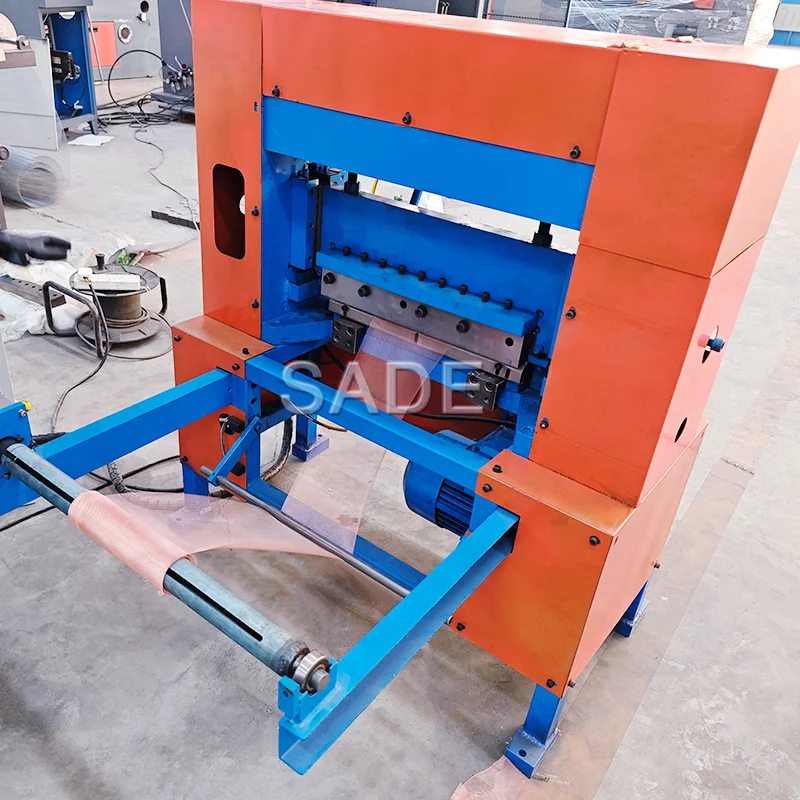

Achieving precise wire geometry is a fundamental challenge in industrial mesh production. Whether for structural reinforcement or security fencing, the transition from coiled raw material to perfectly straight, accurately cut segments determines the overall quality of the finished weld. This requires a sophisticated balance of mechanical tension and timed cutting mechanisms. For operators managing high-volume production lines, the integration of automated feeding systems is no longer a luxury but a necessity to reduce manual labor and eliminate human error during the setup phase.
Modern fabrication relies on equipment that can handle varying wire diameters while maintaining strict tolerance levels. By utilizing PLC-controlled synchronous technology, manufacturers can now produce diverse mesh sizes on a single panel, significantly increasing operational flexibility. Understanding the technical nuances of these systems allows procurement managers to select machinery that not only meets current output targets but also scales with future infrastructure demands.

The core of high-efficiency wire processing lies in the ability to synchronize the feeding, straightening, and cutting phases. By implementing a PLC program system, the equipment achieves intellectualized operation, where the touch screen and keyboard input panel allow for rapid adjustments of welding time and sub-control parameters. This level of precision ensures that every segment of wire is processed with identical tension, preventing bowing or twisting in the final product.
A critical technical advantage is the adoption of high-efficiency welding machine transformers. These components expand the usable wire diameter scope, allowing a single machine to handle different gauges without requiring extensive hardware reconfiguration. When paired with automatic feeding systems, the production cycle is streamlined, reducing the downtime typically associated with manual material loading.

One of the most significant bottlenecks in wire mesh manufacturing is the constant need for material replenishment. To address this, advanced systems now incorporate large-scale storage devices capable of holding approximately 1.5 tons of material. This capacity allows for the truly automatic feeding of both warp and weft threads, drastically reducing the number of operators required on the factory floor.
By automating the material flow, enterprises can shift their labor focus from repetitive loading tasks to quality oversight and machine maintenance. This transition not only lowers operational overhead but also increases the overall safety of the workspace by minimizing the manual handling of heavy wire coils. The result is a continuous production flow that maximizes the utilization of the welding transformer and cutting head.
The output from high-precision straightening and welding equipment is essential for several critical sectors. In the construction industry, floor and wall reinforcing mesh is used to provide structural integrity to concrete, ensuring that buildings can withstand tension and prevent cracking. Similarly, in civil engineering, reinforcing mesh is indispensable for the construction of tunnels, bridges, and road networks where long-term durability is non-negotiable.
Beyond construction, the versatility of these machines allows for the creation of specialized security fencing. The ability to adjust mesh width and wire spacing enables the production of panels that meet specific security ratings or agricultural requirements. Because different mesh sizes can be welded on the same panel, manufacturers can offer customized solutions to clients without investing in multiple dedicated machine lines.
| Model Parameter | HWJ1200B | HWJ2000B | HWJ2500B | Technical Range |
|---|---|---|---|---|
| Max Mesh Width | 1200mm | 2000mm | 2500mm | Up to 2500mm |
| Wire Diameter | 3-6mm | 3-6mm | 3-6mm | 3-6mm Standard |
| Line Wire Spacing | 50-300mm | 50-300mm | 50-300mm | 50-300mm Adjustable |
| Welding Speed | 80-100 t/min | 80-100 t/min | 80-100 t/min | High Efficiency |
| Electric Power | 160KVA4 | 160KVA6 | 160KVA8 | Scalable Power |
When searching for wire straightening and cutting machine suppliers, procurement teams must look beyond the initial price point. The true value of a supplier is found in their engineering depth and their ability to provide custom designs. A manufacturer with independent R&D capabilities can tailor the machine's PLC logic to specific production requirements, such as unique mesh patterns or specialized material handling.
Quality certifications like ISO9001 and CE are baseline requirements, ensuring that the equipment meets international safety and performance standards. Furthermore, the availability of a robust service network is vital. Given the mechanical wear associated with wire straightening and cutting, the ability to source genuine replacement parts and receive technical support quickly is the difference between a minor pause and a costly production shutdown.
The industry is moving toward "Smart Factory" integration, where wire processing machinery communicates directly with warehouse management systems. We are seeing a shift toward higher-precision sensors that can detect wire diameter deviations in real-time, automatically adjusting the straightening rollers to compensate. This reduces scrap rates and ensures that every piece of welded mesh is within a tighter tolerance band.
Additionally, there is a growing demand for machines that can handle high-tensile and coated wires without damaging the surface finish. This requires a redesign of the cutting heads and the use of advanced alloys in the rollers. As infrastructure projects become more complex, the demand for multi-functional equipment that combines straightening, cutting, and welding into a single, seamless automated line will continue to grow.
A PLC (Programmable Logic Controller) system ensures that all mechanical movements—feeding, straightening, and welding—are perfectly synchronized. This eliminates timing errors and allows for precise control over the welding duration, resulting in stronger bonds and consistent mesh dimensions.
Yes, the HWJ series is designed for high flexibility. The synchronous control technique allows different mesh sizes to be welded on the same panel, which is ideal for manufacturers who serve a variety of client specifications.
The large storage capacity enables the automatic feeding of both warp and weft threads. This significantly reduces the manual labor required for loading wire coils, thereby lowering operational costs and increasing production uptime.
The current models are optimized for wire diameters ranging from 3mm to 6mm, making them suitable for a wide array of applications including construction reinforcement and industrial fencing.
You should prioritize suppliers with ISO9001 for quality management and CE certification for safety and technical compliance, ensuring the equipment is safe for operation and built to international standards.
It is primarily used in building floor and wall reinforcement, tunnel and bridge construction, and various types of protective fencing and security barriers.
Selecting the right wire processing equipment requires a balance of technical capability and supplier reliability. By focusing on automation, PLC precision, and material handling efficiency, manufacturers can significantly optimize their production output while maintaining the highest quality standards for structural applications.